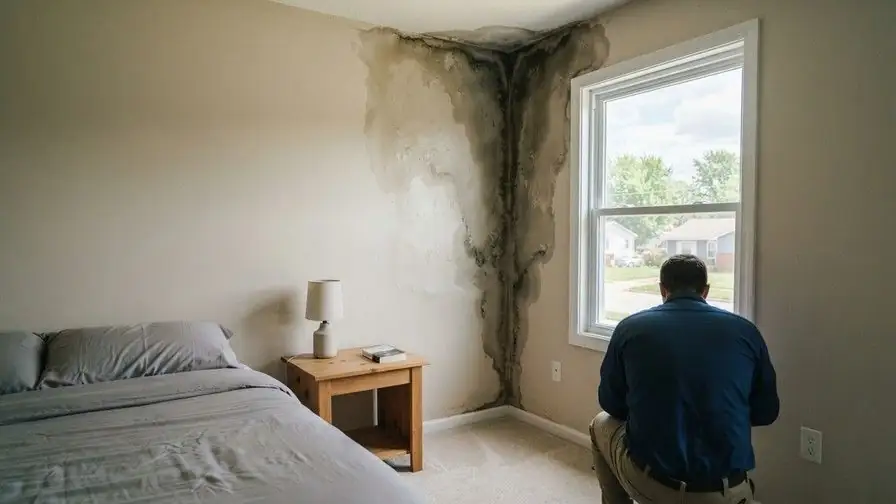
A dark stain on a wall or ceiling can make your stomach drop, especially after reading stories about black mold. Not every dark mark is mold, though, and not every mold is the kind people worry about. This guide helps Joplin homeowners sort out what they might be looking at, what usually causes it and when it makes sense to have a provider take a closer look.
How can I tell if a dark wall stain is black mold?
A dark wall stain may be mold if it has a fuzzy or slimy texture, spreads in patches, smells musty or appears where moisture lingers, such as near windows, bathrooms or exterior walls. Water stains are usually flat rings with defined edges, and soot or dirt wipes off easily. Color alone cannot identify the mold type. If you are unsure, a provider can check moisture levels and take a sample.
Mold, Water Stain or Dirt?
Several things can leave dark marks on walls and ceilings. Water stains are usually brown or yellow rings with defined edges, left behind as water dries. They show that moisture reached the surface but do not always mean mold is growing. Soot from candles or a furnace can leave gray streaks, often along cold spots or above heat sources. Dirt and dust collect in patterns along studs or where air moves.
Mold looks different up close. It often has a fuzzy, speckled or slimy texture, spreads in irregular patches and may come in several colors at once: black, green, gray or white. A musty smell nearby is a strong clue. If you gently wipe a small spot with a damp cloth and it smears or comes back within days, mold is likely. If you are not sure, leave it alone and ask for an inspection.
Why the Black Mold Label Is Misleading
The phrase black mold is often used for one particular species that grows on very wet materials like drywall and ceiling tiles. But many common molds are dark, and some light-colored molds grow in the same places. You cannot tell one from another by sight. Lab testing is the only reliable way to identify the type.
For cleanup, the type usually does not change the approach. Any mold growing inside a house should be removed, and the moisture behind it should be fixed. Focusing on the color can lead to either panic over a small spot or complacency about a large patch that happens to be a lighter shade. The size of the growth and what is feeding it matter more than its color.
When to Call for a Closer Look
Some situations call for more than a quick wipe:
- The stain is larger than a small patch or keeps spreading
- It is on drywall, wood or ceiling material rather than tile or glass
- It comes back after cleaning
- There is a musty smell in the room
- You know there was a leak, flood or roof problem nearby
- Paint is bubbling or the wall feels soft
In those cases, moisture has likely reached materials behind the surface, and growth may be larger than what you see. A provider can check moisture levels, look for the source and recommend whether cleaning, removal or more investigation makes sense. Before the visit, write down when you first noticed the spot, whether it has grown and whether it follows rain, showers or a past leak. Those notes help the provider find the cause.
Next Steps for a Dark Stain
A dark stain is a sign to pay attention, not to panic. Look at the texture, note any smell and think about where moisture might be coming from. If it seems like mold or keeps coming back, have it checked. Our black mold removal page explains how dark growth is handled, and one call connects you with an independent provider in Joplin.
Frequently Asked Questions
Can I paint over a mold stain?
Painting over mold hides it but does not remove it, and growth can continue under the paint and push through again. Fix the moisture source and clean or remove the growth first. Stain-blocking primer can then cover any remaining discoloration on a clean, dry surface.
Why do dark spots appear near my windows in winter?
Warm indoor air meets cold glass and frames, and moisture condenses. That water collects on sills and the wall below, and mold can grow there if it stays damp. Wiping condensation, running a dehumidifier and improving airflow near windows help. Persistent growth may point to a leak around the frame.
Is a small black spot in the shower a big problem?
Usually not. Small spots on grout or caulk in a shower are common and can be cleaned with a household cleaner once ventilation is improved. If the spots spread to drywall or the ceiling, keep coming back quickly, or the tile feels loose, have the area checked for hidden moisture.