Joplin's severe weather season from April through June is also its wettest stretch of the year. Hail, wind and heavy rain can damage roofs in ways that are hard to spot from the ground, and small leaks can soak attic sheathing and insulation for weeks before a stain shows up on a ceiling. This guide explains what to watch for after storm season and how to keep your attic dry.
Can spring storms cause attic mold in Joplin?
Yes. Spring storms in Joplin can crack shingles, lift flashing and damage vents, letting rain reach the roof deck. Small leaks soak sheathing and insulation slowly, and mold can grow in the damp attic before any ceiling stain appears. After storm season, check upstairs ceilings for stains, smell for mustiness on the top floor and look through the attic hatch for dark spots or damp insulation.
How Storm Damage Reaches the Attic
Hail can bruise or crack shingles, knocking loose the granules that protect them. Wind can lift shingle edges and bend flashing around chimneys, skylights and vent pipes. Debris can puncture the roof surface. None of this is always visible from the yard, and some damage lets water in only during heavy, wind-driven rain.
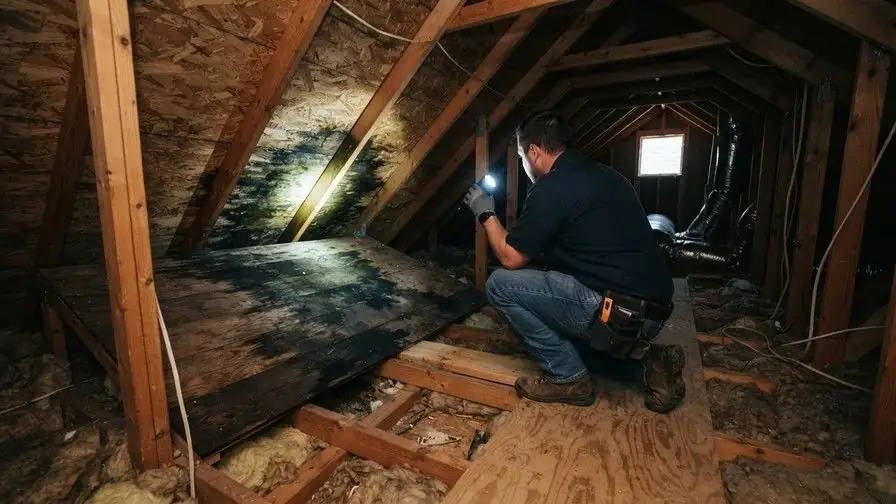
Once water gets past the shingles, it reaches the roof deck, the layer of wood sheathing underneath. Wood soaks up water and holds it. If the leak is small, the water may never drip onto the ceiling; it simply keeps the sheathing and insulation damp. Over time, that dampness feeds mold, often seen as dark spotting or staining spreading across the underside of the roof deck. By the time a stain appears on the ceiling below, the problem in the attic may be well along.
What to Check After Storm Season
A simple check after the spring storms can catch problems early:
- Look at upstairs ceilings for new stains, especially near exterior walls and around light fixtures
- Notice whether the top floor smells musty on warm afternoons
- Open the attic hatch and shine a flashlight across the underside of the roof
- Look for dark spots, water trails or damp, compressed insulation
- Check around the chimney, vent pipes and any skylights
If you had roof repairs after a storm, it is worth a look even if everything seems fine. Water may have entered between the damage and the repair. Do not walk across the attic if you are not sure where to step; stay on the framing or just look from the hatch. Photos taken from the hatch are often enough to share.
Keeping the Attic Dry Year Round
Storm leaks are one cause of attic mold, but ventilation is another. Warm, moist air from the house rises into the attic through gaps around fixtures, the hatch and plumbing stacks. If the attic is poorly ventilated, that air condenses on the cold roof deck in winter. Bathroom and kitchen fans that end in the attic make it worse.
Sealing air leaks from the living space, making sure fans vent outside, and keeping soffit and roof vents clear all help. After any storm repair, ask the roofer to confirm that flashing and vents are sealed. If you find mold, fix the moisture first. A provider can then clean the affected wood and replace wet insulation so the problem does not return.
After the Storms Pass
Storm season brings rain and wind that can open small gaps in your roof. A quick check of the attic afterward can catch moisture before it becomes a larger mold problem. Our attic mold remediation page explains the cleanup in more detail, and a call or form puts you in touch with one independent mold company serving Joplin.
Frequently Asked Questions
Should I check my attic after every storm?
A quick look after major storms, especially those with hail or high winds, is a good habit. You do not need a full inspection each time. Look for new ceiling stains, musty smells upstairs and any obvious damp spots through the attic hatch. Call a provider if you notice something.
Will my roofer handle attic mold?
Roofers fix the roof, which stops new water from coming in. Cleaning mold off sheathing and replacing wet insulation is usually separate work done by a mold provider. Coordinating the two makes sense: fix the roof first, then clean the attic so the problem does not return.
Can attic mold cause a smell in my bedrooms?
It can, especially in upstairs rooms on warm days when attic air is hottest and gaps around fixtures let some of it into the living space. If upstairs rooms smell musty and you cannot find a source, the attic is worth checking along with nearby bathrooms.