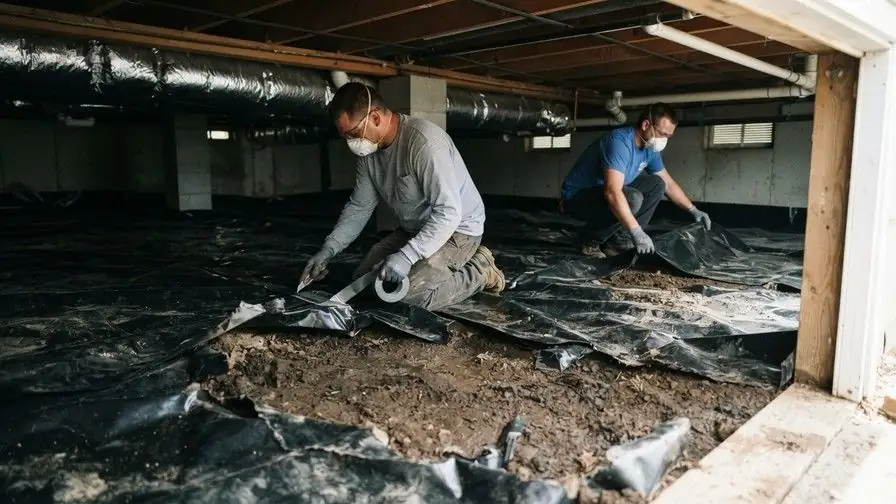
The crawl space is one of the least visited parts of a house, which is exactly why moisture problems there can go on for a long time. Damp soil, poor airflow and wood framing combine to make crawl spaces a common place for mold to grow. This guide explains how moisture builds up under Joplin homes, the clues you may notice upstairs and what tends to help.
Why does my Joplin crawl space get moldy?
Crawl spaces get moldy because moisture from the soil, plumbing leaks or humid outside air builds up under the house and settles on wood joists and subflooring. Without a good vapor barrier, drainage or airflow, that wood stays damp long enough for mold to grow. Signs include musty smells upstairs, soft floors and condensation on pipes. Fixing moisture sources and cleaning affected wood addresses the problem.
How Moisture Builds Up Below the Floor
Soil is almost never fully dry. Even when the surface looks dry, moisture rises from below and evaporates into the crawl space. Without a vapor barrier covering the ground, that moisture raises the humidity in the space. When humid air touches cooler surfaces such as joists, beams, ductwork and the underside of the floor, it can condense.
Other sources add to the problem. Gutters and downspouts that empty near the foundation can soak the soil around the house. Plumbing lines under the floor can leak slowly for months before anyone notices. In warm, humid weather, vents that bring in outside air may actually add moisture rather than remove it. Over time, wood that stays damp begins to grow mold, and in severe cases, it can soften and lose strength.
Clues You May Notice Upstairs
Because the crawl space is out of sight, the first signs usually show up in the living space:
- A musty or earthy smell, often stronger in closets, bedrooms or near floor vents
- Floors that feel soft, bouncy or unusually cold
- Higher humidity indoors, with windows that fog easily
- Shoes, linens or boxes in low closets that pick up a damp smell
- Insects or rodents drawn to the damp space
Air from the crawl space rises into the house through gaps around pipes, wires and ductwork. That is why a problem below the floor can affect the air above it. If you notice several of these clues, it is worth having the crawl space checked rather than trying to mask the smell. Air fresheners hide the clue without fixing anything underneath.
Fixes That Keep the Space Dry
Cleaning moldy wood is only part of the solution. Keeping the space dry afterward is what makes the cleanup last. Common fixes include laying or repairing a vapor barrier over the soil, sealing gaps in the foundation walls, improving gutters and grading so water drains away from the house, and repairing plumbing leaks.
Some houses benefit from closing vents and adding a dehumidifier to control humidity under the floor. Others do better with improved ventilation. The right approach depends on the house, the soil and the climate. A provider can measure conditions in your crawl space and explain which fixes would make the biggest difference. Some of those repairs belong to other trades, but knowing what is needed helps you plan.
Keeping Your Crawl Space Healthy
A dry crawl space protects the wood that holds up your floors and keeps musty air out of your living space. If you notice clues upstairs, have the space checked before the problem grows. Our crawl space mold removal page covers the work in more detail, and a call connects you with one independent provider serving Joplin.
Frequently Asked Questions
How often should I check my crawl space?
A quick look from the entry once or twice a year, and after heavy rain or a plumbing problem, helps catch issues early. Look for standing water, torn vapor barrier, damp insulation and visible growth on joists. If anything looks off, have a provider take a closer look.
Is a vapor barrier enough to stop crawl space mold?
A vapor barrier helps a lot by limiting moisture from the soil, but it is not always enough on its own. Drainage problems, plumbing leaks and humid air can still raise moisture. Many crawl spaces need a combination of fixes. A provider can measure conditions and recommend what fits your house.
Can crawl space mold weaken my floors?
Over a long period, wood that stays wet can soften and lose strength, especially if rot sets in along with mold. Soft or bouncy floors are a sign to have the crawl space checked. Catching moisture problems early protects the framing and keeps repairs smaller.