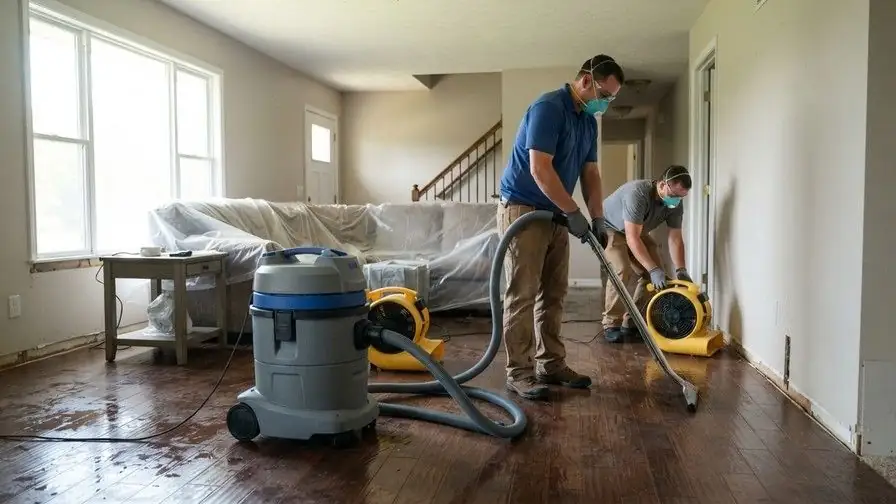
Water in the house is stressful, whether it comes from a burst pipe, an overflowing washer or a storm leak. What you do in the first few days has a big effect on whether mold follows. This guide lays out a practical order of steps for Joplin homeowners, from stopping the water to deciding when to call for a mold check.
What should I do in the first days after a leak?
After a leak in your Joplin house, stop the water source, turn off power to wet areas and document everything with photos. Remove standing water, pull up wet rugs and carpet pad, move furniture off wet floors and take soaked items out of the room. Run fans and a dehumidifier to dry the space. Call your insurer, then have wet walls and floors checked with a moisture meter before rebuilding.
Stop, Shut Off and Document
The first priority is stopping the water. For a plumbing leak, find the main shutoff valve and close it; it is worth knowing where that valve is before you ever need it. For an appliance, shut off its supply valve. For a roof leak, place buckets and move belongings, and cover the opening only if it is safe to do so.
Next, make the area safe. If water is near outlets, cords or appliances, turn off power to that part of the house at the breaker panel. Then document. Take photos and video of the water, the damaged materials and your belongings before you move anything. Note the time and date. These records help with insurance and give any provider a clear picture of what happened.
Dry Everything You Can
Moisture that lingers is what allows mold to start, so drying is the most important step you can take. Work through the space in order:
- Remove standing water with a wet vacuum, mop or towels
- Pull up wet area rugs and take them outside to dry
- Lift furniture off wet carpet with blocks or foil under the legs
- Take cushions, boxes, books and clothing out of the wet area
- Open windows if the outdoor air is dry, and run fans and a dehumidifier
- Open cabinet doors and closets so air can reach inside
Carpet pad soaks up water like a sponge and rarely dries well in place. If it is soaked, it usually needs to come out. Keep fans and dehumidifiers running for several days, even after surfaces feel dry, since moisture hides inside walls and under flooring.
When to Call for a Mold Check
Even if everything looks dry, it is worth having a provider check with a moisture meter after a significant leak. Water can wick up drywall, soak insulation inside walls and sit under flooring without showing on the surface. Those hidden damp areas are where mold usually starts.
Call sooner rather than later if the water was from a flood or sewage backup, if drywall or insulation stayed wet for more than a short time, if you notice a musty smell, or if you see staining or growth. The provider can tell you what needs more drying, what should be removed and whether mold has already started. Let your insurance agent know what happened early, and keep all your photos and receipts together.
Getting Back to Normal
Quick action after a leak protects your house from mold. Stop the water, document the damage, dry everything you can and have hidden moisture checked before you rebuild. Our page on mold help after water damage covers what a provider does next, and a call connects you with one independent mold company serving Joplin.
Frequently Asked Questions
Should I call my insurance company right away?
Yes, it is a good idea to report water damage early. Your agent can explain what your policy covers and what documentation they need. Keep photos, video, receipts for fans or cleanup supplies and notes about when the damage happened. Ask before throwing away damaged items, in case the adjuster wants to see them.
Can I dry wet drywall without removing it?
Sometimes. Drywall that got briefly wet from clean water and dries quickly can often stay. Drywall that stayed soaked, wicked water up from a flood or came into contact with dirty water usually needs to be cut out. A moisture meter shows whether the material has dried completely.
Is floodwater different from a pipe leak?
Yes. Water from a clean supply line is treated differently from floodwater or sewage, which can carry contamination. Porous materials touched by dirty water are usually removed rather than dried. Tell the provider what kind of water was involved so they can plan the right approach.