A burst pipe, an overflowing appliance or a storm leak can leave a lot of water in a house. Once the water stops, the next worry is mold. Wet drywall, carpet and insulation can start growing mold if they do not dry, so the days after a water event matter. We connect Joplin homeowners with one independent mold company that checks houses for growth after water damage, and this page covers what to do in the meantime.
First Steps After Water Gets In
Start by stopping the water if you safely can: shut off the main valve for a plumbing leak, or cover a roof opening if it is safe to do so. Turn off electricity to wet areas if outlets or cords are near water. Then document everything. Take photos and video of standing water, wet materials and damaged belongings before anything is moved. Those records help with insurance and with planning cleanup.
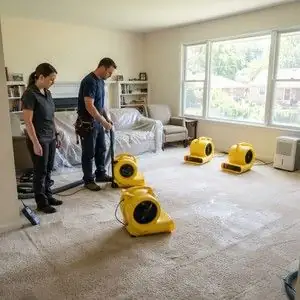
Next, start drying. Remove standing water with a wet vacuum or mop, pull up wet rugs, and move furniture off wet carpet. Open windows if the weather is dry, and run fans and a dehumidifier. Take wet items such as cushions, boxes and clothing out of the room. The goal is to dry the space and materials as thoroughly as possible, since lingering moisture is what allows mold to start.
What Usually Has to Go
Some materials dry well and others rarely do. After a significant water event, certain items are usually removed:
- Carpet pad that has been soaked, and often the carpet itself
- Drywall that wicked water up from the floor, usually cut above the water line
- Insulation in wet wall cavities or ceilings
- Particleboard furniture and cabinet bases that swelled
- Cardboard, paper and fabric items that stayed wet
Hard surfaces like tile, concrete, metal and solid wood often dry and can be cleaned. Water from a clean supply line is treated differently from floodwater or sewage, which carries contamination. Tell the provider what kind of water was involved when you call, since it changes what can be saved. Photos taken before anything was moved help the provider understand how far the water reached.
Checking for Mold After the Water Is Gone
Even after things look dry, moisture can linger inside walls, under flooring and in insulation. A provider uses a moisture meter to find damp areas that are not obvious from the surface. If materials are still wet, they may recommend more drying or removing the affected sections before mold can take hold.
If growth has already started, the provider follows a remediation plan: containment, removal of affected porous materials, cleaning and drying. They will explain what they found and what needs to happen next. Water damage restoration, plumbing and roofing repairs may fall to other trades and are outside what we arrange, but the mold provider can tell you what they saw and help you plan the order of work. Ask for that order in writing.
After a Leak in Your Joplin Home
Water damage does not always turn into mold, but the risk grows the longer materials stay wet. When you call, tell us what happened, when it happened, what kind of water was involved and which rooms were affected. We pass that to one independent mold company in Joplin, and they follow up to arrange a check of the house.
Frequently Asked Questions
When can mold start growing after water damage?
Mold can begin growing on wet materials within a short time if they stay damp, which is why drying quickly matters so much. Warm, humid conditions speed things up. Start drying right away and have materials checked with a moisture meter if you are unsure whether they have dried completely.
Does all wet drywall need to be replaced?
Not always. Drywall that got briefly wet from clean water and dries quickly can sometimes stay. Drywall that soaked for a long time, wicked water up from a flood or came into contact with dirty water is usually removed. The provider will check moisture levels and condition before recommending replacement.
Will my insurance cover mold after a leak?
Coverage depends on your policy and the cause of the water damage. Many policies treat sudden events like burst pipes differently from slow leaks. Call your agent, keep your photos and records, and ask the provider for a written description of the work if you plan to file a claim.