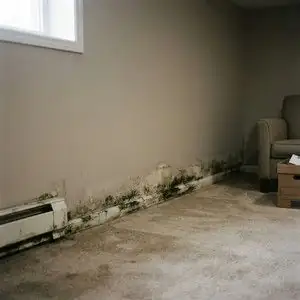
Basements sit below ground, where soil moisture, seepage and cool walls all invite mold. A finished basement with carpet, drywall and stored boxes gives that moisture plenty to grow on. Joplin homeowners often notice the problem as a damp smell on the stairs or staining along the bottom of a wall. We connect you with one independent mold company that handles basement mold in houses around the city.
Where Basement Moisture Comes From
Basement moisture usually arrives from one of three directions. From outside, rain and groundwater can push through foundation cracks, around window wells or where the wall meets the floor. Poor grading and downspouts that empty near the house make this worse after heavy rain.
From inside, plumbing leaks from water heaters, washing machines, sump pumps and drain lines can soak floors and walls. And from the air, humid summer air settles in the cool basement and condenses on walls, pipes and floors. A basement can grow mold from any one of these, and many have more than one at work. A provider checks each possibility with a moisture meter and visual inspection before deciding on a plan, since the fix for seepage is very different from the fix for humidity.
Finished Basements and Hidden Growth
Finished basements present a special challenge. Drywall, carpet, wood paneling and framing cover the foundation walls, so moisture can soak into the back of those materials without showing on the surface for a long time. By the time staining appears at the bottom of a wall or the carpet smells, growth may cover a larger area.
- Drywall and paneling against foundation walls
- Carpet and pad on a concrete floor
- Wood framing sitting directly on concrete
- Cardboard boxes, books and fabric in storage areas
The provider may check behind baseboards or open a small section of wall to see what is happening behind the finish. That small step often saves money by showing whether growth is limited to one area or spread along the whole wall.
How Basement Mold Is Removed
Removal begins once the moisture source is identified and controlled. Containment keeps dust from moving upstairs, and filtered air machines run during the work. Moldy drywall, carpet, pad and insulation are usually removed and bagged. Concrete and sound framing are cleaned and dried.
To keep the problem from returning, the provider may suggest a dehumidifier, better drainage outside, sealing foundation cracks or using moisture-resistant materials if the basement is refinished. Some of those steps belong to other trades and are outside what we arrange. Ask the provider to explain what they found and which repairs will make the biggest difference before you rebuild. Fixing grading, gutters or a leaking wall first keeps new drywall and carpet from becoming the next place mold grows.
Next Steps for a Damp Joplin Basement
If your basement smells damp or shows staining at the bottom of the walls, it is worth having it checked before the problem spreads. When you call, share whether the space is finished, whether it has flooded and what is stored down there. We pass that to one independent mold company in Joplin, and they follow up to plan a visit.
Frequently Asked Questions
Can a dehumidifier stop basement mold?
A dehumidifier helps control humidity, which reduces the chance of new growth, but it does not remove existing mold or stop water coming through walls. If growth is already present, it needs to be cleaned or removed. The provider can recommend whether a dehumidifier makes sense alongside cleanup.
Do I have to tear out my finished basement?
Not necessarily. If growth is limited to one area, the provider may remove only the affected section of drywall, carpet or framing. A moisture meter and a look behind baseboards help define the edges. The provider will explain how much needs to come out after checking the space.
What should I do with stored items in a moldy basement?
Hard items like plastic bins, metal and glass can usually be cleaned. Cardboard, paper, fabric and upholstered items with visible growth are harder to save. Move unaffected items away from the damp area if you can do so without disturbing growth, and ask the provider for advice on the rest.