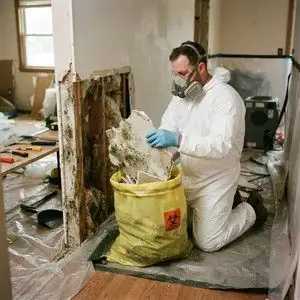
Mold removal is the hands-on part of a mold job: taking out or cleaning the material where growth has taken hold. In a Joplin house that might be a section of drywall behind a leaking washer, carpet pad in a damp basement or insulation under a roof leak. We connect you with one independent mold company that handles removal in homes across the city, and this page explains what that work usually looks like.
What Happens During a Removal Job
A removal job begins before anything is torn out. The crew confirms where the water came from and whether it has stopped, because pulling out moldy drywall while a pipe is still dripping only resets the clock. Next comes containment. Plastic sheeting and taped seams close off the work area, and air machines with filters keep dust from drifting into the rest of the house.
Then the actual removal starts. Porous materials with growth, such as drywall, ceiling tiles, carpet pad and insulation, are usually cut out and bagged inside the containment. Hard materials such as framing lumber, metal and concrete are often cleaned rather than replaced. Once the material is out, surfaces are vacuumed with filtered equipment and wiped down, and the area is allowed to dry fully before anything new goes back in.
What Can Be Cleaned and What Has to Go
Homeowners often ask whether a stained wall can simply be scrubbed. The answer depends on the material. Mold sends roots into soft, porous surfaces, so cleaning the face of drywall or carpet rarely reaches all of it. Those materials are usually removed. Solid wood can often be cleaned and dried if the growth is on the surface and the wood is still sound.
- Usually removed: drywall, insulation, carpet and pad, ceiling tile, cardboard
- Often cleaned: framing lumber, plywood in good shape, concrete, tile, metal
- Case by case: furniture, rugs, clothing and stored items
The provider will walk through the list with you before work starts, so you know what will leave the house and what will stay. Ask for that list in writing if it helps you plan repairs or talk with your insurer.
Getting Ready for the Crew
A little preparation makes the visit go smoothly. Clear a path from the door to the affected room, and move small valuables out of the area if you can do so without disturbing the growth. Leave visible mold alone; scrubbing or spraying it can scatter spores into rooms that were clean. Turn off any fans blowing across the spot and close the door to the room if it has one.
Plan for some noise and some foot traffic. Depending on the size of the job, you may lose use of a bathroom, a bedroom or part of the basement for a while. Ask the provider how long the area will be closed off, where equipment will sit and whether pets need to stay in another part of the house. Knowing those details ahead of time keeps the day from feeling chaotic.
Next Steps for Mold Removal in Joplin
If you can see mold spreading on a wall, floor or ceiling, removal is usually the step that gets your house back to normal. Before you call, note where the growth is, when you first noticed it and whether there has been a leak. We pass that information to one independent mold company in Joplin, and they follow up to plan the visit and give you their own estimate.
Frequently Asked Questions
How long does mold removal take in a Joplin house?
A single small area can often be handled in a day or two once the moisture is under control, while a large basement or several rooms can take longer. Drying time adds to the schedule. The provider gives you a timeline after the visit, based on how much material comes out and how quickly the space dries.
Will the crew replace the drywall they remove?
Removal and rebuilding are often separate steps. Some mold companies handle basic replacement, while others leave the area clean and dry for your own contractor. Ask the provider which approach they use, and make sure the estimate spells out where their work ends so there are no surprises.
Is it safe to stay home during removal?
For most small and mid-size jobs, yes, because the work area is sealed and filtered air machines run during removal. For larger jobs, or if someone in the house has breathing or health concerns, the provider may suggest staying elsewhere for part of the work. Ask about containment during the visit.