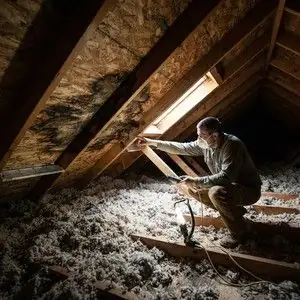
The attic is out of sight for most homeowners, so mold there can grow for a long time before anyone notices. In Joplin, spring storm season and summer humidity both send moisture into attics, through roof leaks, poor ventilation or bathroom fans that vent into the attic instead of outdoors. We connect you with one independent mold company that handles attic remediation in houses around the city.
How Attics Get Damp
Attic mold almost always traces back to one of a few causes. Roof leaks are the obvious one: a lifted shingle, cracked flashing around a chimney or vent pipe, or hail damage can let water reach the roof deck. Even small leaks soak sheathing and insulation over time.
Ventilation problems are just as common. Warm, moist air from the living space rises into the attic through gaps around light fixtures, the attic hatch and plumbing stacks. If the attic does not have enough vents low along the eaves and high near the ridge, that moisture condenses on the cold underside of the roof in winter. Bathroom and kitchen fans that end in the attic rather than outside add even more moisture. The result is often a pattern of dark staining across the sheathing, sometimes with frost or water droplets in cold weather.
Signs to Watch For
Attic mold often shows itself indirectly. Watch for these clues:
- Stains or discoloration on upstairs ceilings
- A musty smell on the top floor, especially on warm days
- Dark spotting on the underside of the roof deck when you look through the hatch
- Damp or compressed insulation
- Frost or water drops on nails poking through the sheathing in winter
If you had storm damage repaired on your roof, it is worth asking for an attic check afterward even if everything looks fine from below. Water can get in during the time between the damage and the repair, and some leaks are slow enough that staining takes a while to appear on the ceiling. A quick look from the hatch with a flashlight after heavy rain can catch a problem early.
What Attic Remediation Involves
Attic work starts with stopping the moisture. That might mean a roof repair, rerouting a bathroom fan to the outside, sealing air leaks from the living space or improving ventilation. Some of those fixes fall to a roofer or general contractor and are outside what we arrange, but the mold provider will explain what they found.
Once moisture is under control, the provider cleans the affected sheathing and framing. Methods vary, but often include filtered vacuuming, scrubbing or other approaches suited to wood surfaces. Wet or moldy insulation is usually removed and replaced. Containment keeps dust from falling into the living space through the hatch or light fixtures. Ask the provider how they will protect the rooms below and how long the attic will be off limits.
Getting Your Joplin Attic Checked
If you see ceiling stains upstairs, smell mustiness on the top floor or had roof damage after a storm, the attic deserves a look. When you contact us, mention any recent roof work or storm damage. We pass your request to one independent mold company in Joplin, and they follow up to arrange a visit to your house.
Frequently Asked Questions
Can attic mold spread into my living space?
Attic air does not usually flow down into living spaces the way crawl space air flows up, but disturbed growth can drop through gaps around fixtures and the hatch. More often, the attic mold points to moisture that may also be affecting ceilings. Cleaning the attic and fixing the moisture source protects the rooms below.
Should my bathroom fan vent into the attic?
No. Bathroom and kitchen exhaust fans should vent all the way outside through the roof or a wall. A fan that ends in the attic sends warm, moist air onto the roof deck, where it can condense and feed mold. The provider can check where your fans end and recommend a fix.
Does all the insulation have to be replaced?
Not always. Insulation that is wet, compressed or has visible growth is usually removed. Dry insulation in unaffected parts of the attic can often stay. The provider will check moisture levels and condition and tell you how much needs to come out before cleaning the wood above it.