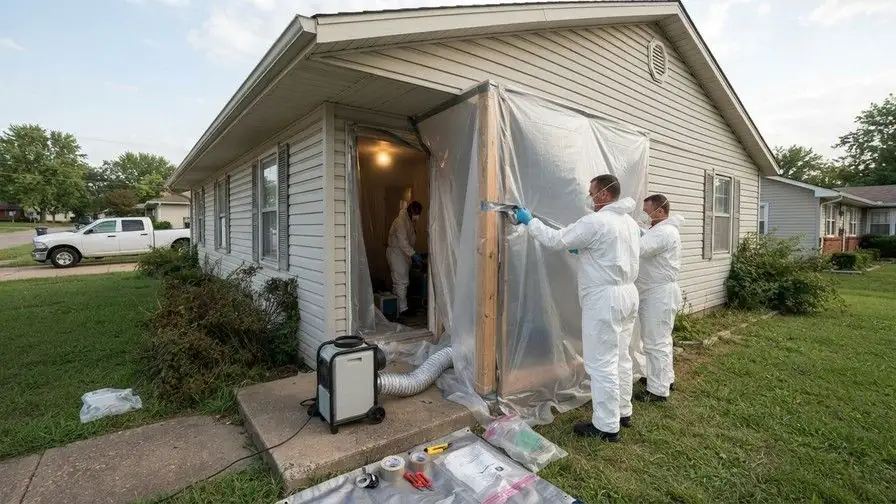
Mold work comes with its own vocabulary, and the terms can be confusing when you are trying to understand an estimate. Removal, remediation, containment and abatement get used in different ways by different people. This guide explains what the common terms usually mean, so Joplin homeowners can follow the conversation and ask better questions when a provider describes the plan for their house.
What is the difference between mold remediation and removal?
Mold removal usually means taking out or cleaning the material where mold is growing. Mold remediation is broader: it includes finding and fixing the moisture source, sealing off the work area, removing or cleaning growth, drying the space and checking the result. Many people use the words interchangeably, so ask any provider what their plan includes rather than relying on the label. The steps matter more than the name.
Removal and Remediation
Mold removal is the plain term most people use. It describes the physical work of getting moldy material out of the house: cutting out drywall, pulling insulation, removing carpet, and cleaning the surfaces left behind. It is the part of a mold job you can see happening.
Mold remediation is the term industry guidelines tend to use. It covers the whole process around removal: finding the moisture source, controlling it, isolating the work area, removing or cleaning growth, drying, and confirming the result. The idea is that removing mold without fixing the cause and checking the work is incomplete. In practice, many providers say removal when they mean remediation, and vice versa. That is fine as long as their plan covers all the steps. When comparing plans, look at what each one includes rather than which word is on the page.
Containment, Negative Air and HEPA
Containment is the barrier that keeps a mold job from spreading. It usually means plastic sheeting taped around the work area, sometimes with a zippered door. For larger jobs, it can include a small room where workers remove protective gear before walking through the house.
Negative air refers to a machine that pulls air out of the contained area through a filter, so air flows into the work zone rather than out of it. That way, any dust or spores released during removal get pulled through the filter. HEPA is a type of high-efficiency filter used in these machines and in the vacuums crews use to clean surfaces. When a provider describes their plan, ask how the area will be contained and how air will be handled. Those details tell you a lot about how carefully the work will be done.
Other Words You May Hear
A few other terms come up often during mold conversations:
- Abatement: another word for removal or remediation, used more often in other trades
- Source control: stopping the moisture that feeds the mold
- Post-remediation verification: a check after cleanup, sometimes with samples, to confirm the area is back to normal
- Moisture mapping: using a meter to find wet areas in walls and floors
- Encapsulation: sealing a cleaned surface with a coating, sometimes used on framing
If a provider uses a term you do not recognize, ask them to explain it. A good provider is happy to make sure you understand the plan before work starts. Writing the terms down as you hear them makes it easier to compare what different people tell you. It also helps when you read a written estimate later.
Using the Right Words With Your Provider
You do not need to master the vocabulary to get good mold work done, but knowing the basics helps you read an estimate and ask the right questions. Focus on whether the plan covers moisture, containment, removal, drying and a final check. Our mold remediation page covers the steps for Joplin homes, and one call puts you in touch with an independent provider.
Frequently Asked Questions
Is mold abatement the same as remediation?
In most home mold conversations, yes. Abatement is a term borrowed from other trades and generally means removing or reducing a hazard. Some providers use it interchangeably with remediation. As with any term, ask what steps the plan includes rather than relying on the label.
What does post-remediation verification mean?
It is a check after cleanup to confirm the work area is clean and dry. It can be a visual inspection with moisture readings, and sometimes air or surface samples sent to a lab. Some homeowners hire a separate tester for this step. Ask the provider what their final check includes.
Why does containment matter so much?
Disturbing moldy material releases spores and dust. Without containment, that dust can travel through the house and settle in clean rooms. Plastic barriers and filtered negative air keep the mess inside the work area. For anything beyond a small patch, containment is an important part of a careful job.