Toxic mold is a phrase that shows up often in news stories and online searches, and it can make any mold problem feel urgent and scary. The term is not a scientific category, though. It usually refers to molds that can produce certain compounds under some conditions. What matters for your house is how much mold is growing, where it is and what is feeding it. We connect Joplin homeowners with one independent mold company that handles all indoor mold with the same care.
What Toxic Mold Means and Does Not Mean
Some molds can produce compounds called mycotoxins under certain conditions. The phrase toxic mold grew out of that fact, and it is often attached to dark molds that grow on very wet materials. But the presence of a particular mold does not by itself tell you whether those compounds are present, how much, or whether they affect anyone in the house.
Indoor mold growth of any type is worth removing, because it can affect indoor air and because it signals a moisture problem. Rather than focusing on whether a mold is labeled toxic, focus on the size of the growth and the water behind it. If someone in your household has health concerns, talk with a doctor, who can advise on medical questions that a mold provider cannot answer.
Testing for Specific Molds
If you want to know exactly what is growing, lab testing can identify mold types. A surface sample from visible growth or an air sample from the affected area can be sent for analysis. That can be useful for peace of mind, for documentation or when someone in the house has a specific medical concern.
For many jobs, though, the type of mold does not change the cleanup plan. Remediation follows the same steps whether the growth is one species or another: control moisture, contain the area, remove affected porous materials, clean hard surfaces and dry the space. Ask the provider whether testing will change their recommendations. If it will not, you may decide to skip it and put that money toward the cleanup itself.
How the Cleanup Is Handled
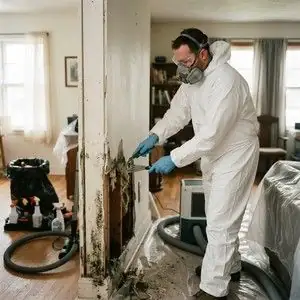
Cleanup of any significant mold growth follows careful steps. The crew wears protective gear, seals off the work area with plastic sheeting and runs filtered air machines to keep dust from spreading. Moldy drywall, insulation, carpet and other porous materials are removed and bagged inside the containment. Hard surfaces are vacuumed with filtered equipment and wiped clean.
After cleanup, the area is dried and checked. Some homeowners choose a post-remediation test to confirm conditions are back to normal, especially if they were worried about the type of mold. Throughout the process, the moisture source must be fixed, or growth will return. Ask the provider to walk you through their plan and their final check so you know what to expect at each stage.
Handling Mold Concerns in Your Joplin Home
If you are worried about toxic mold, the most useful next step is to have the growth and its cause looked at. When you call, describe what you see, where it is and any health concerns in the household. We pass that to one independent mold company in Joplin, and they follow up to arrange a visit and explain their approach.
Frequently Asked Questions
How do I know if my mold is toxic?
You cannot tell by looking. Many molds look similar, and color does not identify the type. A lab test of a surface or air sample can identify which molds are present. Whether testing is worth it depends on your situation. Any indoor mold growth should be removed and the moisture source fixed.
Is toxic mold removal different from regular mold removal?
The steps are generally the same: control moisture, contain the area, remove porous materials with growth, clean hard surfaces and dry the space. The provider may take extra care with containment for large areas or sensitive households. Ask how they plan to protect the rest of the house during the work.
Should I leave my house if I think I have toxic mold?
For most situations, you can stay while the provider assesses the problem and plans the work. For large jobs or households with health concerns, the provider may suggest staying elsewhere during removal. For medical questions about exposure, talk with your doctor.