A mold inspection answers two questions: is there mold growing in the house, and what is feeding it? Joplin homeowners often ask for one after noticing a musty smell with nothing visible, after a roof or plumbing leak, or before buying or selling. We send your request to one independent mold company that inspects houses in the city, and this page covers what the visit usually includes.
What an Inspector Looks For
An inspection is mostly detective work. The inspector starts with the area you are worried about, then follows the moisture. They look for staining, warped materials, peeling paint, condensation and visible growth. They check the places water tends to hide: under sinks, around tubs and toilets, near the water heater, along exterior walls, in the attic and in the crawl space or basement.
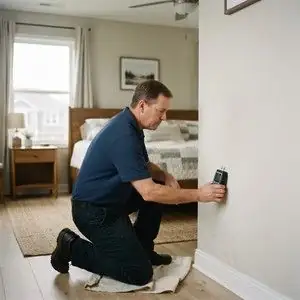
A moisture meter is one of the most useful tools in the visit. It shows whether drywall, wood or subflooring is damp, even when it looks fine. Some inspectors also use thermal cameras to spot cool areas that may signal moisture. Together, these tools help map where water has been and whether it is still present. Expect questions about past leaks, roof work and when you first noticed the problem.
When Sampling Makes Sense
Air and surface samples are not always needed. When growth is visible and the cause is obvious, a sample may not change the plan. Sampling earns its place in a few common situations:
- A strong musty smell but no visible growth
- Water damage that may have spread inside walls or under floors
- A need for documentation before a sale, a purchase or an insurance claim
- A check after remediation to confirm the area is back to normal
Samples go to a lab for analysis, and results usually come back as a count of spores or a list of mold types found. The inspector should explain what the numbers mean in plain language and how they compare to an outdoor reference sample. Ask how the results will change the recommendations before agreeing to pay for testing.
What You Get After the Visit
At the end of an inspection, you should have a clear picture of where moisture and growth are present and what the provider recommends. That may be a simple fix, such as a new exhaust fan and surface cleaning, or a remediation plan for a larger area. Some providers give a verbal summary on the spot, while others follow up with a written report.
If you need documentation for a buyer, seller or insurer, mention that when you call so the provider can plan for it. A written report typically includes photos, moisture readings, sample results if taken, and a recommended scope of work. Keep that report with your home records. It can be useful later if a similar problem shows up in the same area or if a future buyer asks about past water damage.
Scheduling a Mold Inspection in Joplin
An inspection is a good first step when you are unsure whether you have mold or how far it has spread. When you contact us, mention the smell, staining or leak that prompted the call and whether you need a written report. We pass your request to one independent mold company in Joplin, and they reach out to set up a visit.
Frequently Asked Questions
How long does a mold inspection take?
Most home inspections take an hour or two, depending on the size of the house and how many areas need checking. Crawl spaces and attics add time. If samples are taken, lab results usually follow later. The provider can give you a better estimate once they know what prompted the call.
Do I need a mold inspection before buying a house?
It is worth considering if the home inspection notes water damage, a musty smell or past leaks. A mold inspection looks specifically for moisture and growth and can give you a clearer picture before closing. Mention your timeline when you call so the provider can work around your deadlines.
Can an inspection find mold inside walls?
Inspectors use moisture meters and sometimes thermal cameras to find damp areas inside walls without opening them. If readings suggest hidden growth, they may recommend a small inspection hole or an air sample from the wall cavity. They will explain the options before doing anything invasive.